
Media Outreach Strategy for Nonprofits: 2026 Guide

A media outreach strategy for nonprofits is the deliberate process of connecting with journalists, editors, and media influencers to earn coverage that builds organizational visibility and stakeholder trust. This guide to nonprofit media relations covers the full pathway from internal readiness through journalist targeting, story development, outreach sequencing, and channel integration. Earned media remains the most credible form of public exposure a nonprofit can generate, and the organizations that treat it as a structured discipline consistently outperform those that pitch sporadically. The tactics and benchmarks in this media outreach strategy nonprofits guide reflect 2026 best practices, grounded in data and practitioner experience.
What prerequisites are essential for a successful media outreach strategy?
Launching media outreach without internal readiness wastes earned media effort before it has a chance to work. Journalists who respond to a pitch and land on a broken donation page or an outdated website will not follow up. Internal capacity is the foundation every other tactic depends on.
Digital assets every nonprofit needs first
Before sending a single pitch, confirm these assets are in place:
Newsroom page: A dedicated section on your website where journalists can find press releases, leadership bios, and high-resolution images.
Optimized website: Fast load times, clear mission statement, and a working donation flow on mobile.
LinkedIn profiles: Updated profiles for key spokespeople, since journalists routinely verify credibility there.
Media contact list: A curated database of reporters who cover your sector, organized by beat, outlet, and preferred contact method.
Trained spokespeople: At least two staff members who can speak on record with confidence and consistency.
Tools for contact management and outreach
Contact management tools like Cision, Muck Rack, or even a well-maintained spreadsheet give you a structured way to track journalist interactions. Email sequencing platforms help you schedule follow-ups without losing track of threads. The goal is a system that keeps outreach organized without requiring a full-time staff member to manage it.

Pro Tip: Build your media list before you need it. Identifying and following relevant journalists on social media months before you pitch means your name is already familiar when your email arrives.
Asset | Why it matters |
Newsroom page | Gives journalists a self-serve resource, reducing back-and-forth |
Trained spokespeople | Prevents off-message quotes that damage credibility |
Media contact database | Enables targeted, personalized outreach at scale |
Working donation flow | Converts traffic earned from coverage into actual donor action |
How do you create nonprofit stories that attract media attention?
The best nonprofit pitches focus on human-interest stories featuring named beneficiaries with clear emotional arcs, not organizational program summaries. Journalists are not looking for announcements. They are looking for stories their readers will care about. The distinction matters enormously.
Four steps to a story journalists will actually cover
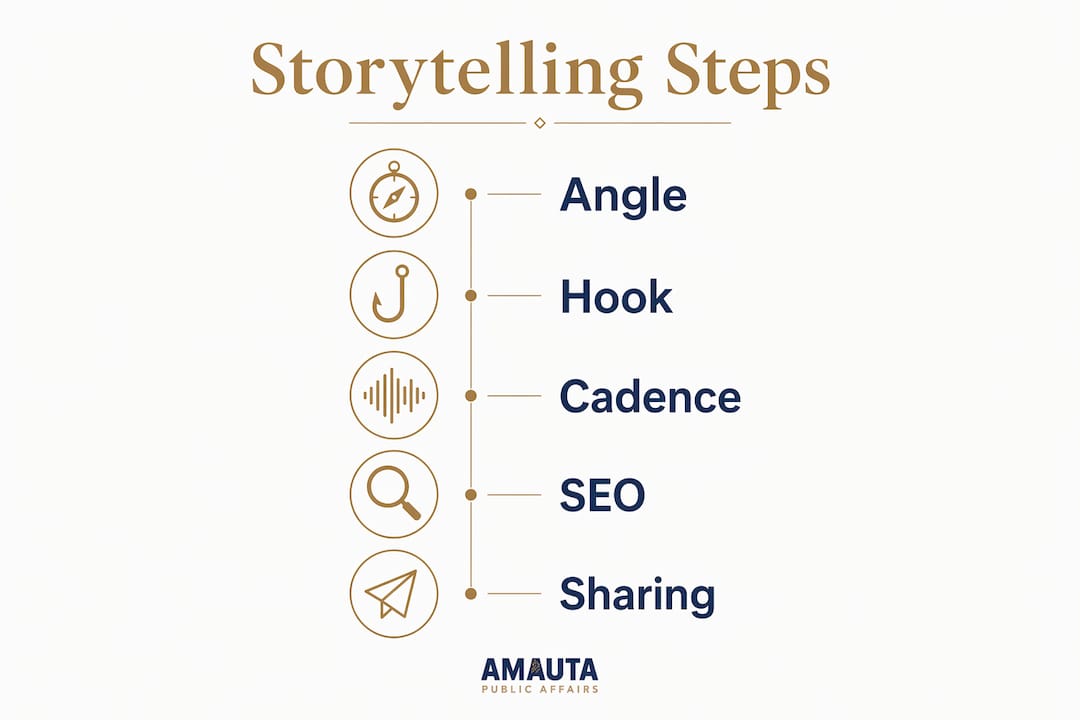
Lead with a person, not a program. Name a specific beneficiary. Describe what their life looked like before your organization’s work and what it looks like now. Concrete before-and-after narratives are far more compelling than aggregate statistics alone.
Add a data hook. Original survey data, a counterintuitive trend, or a local angle on a national issue gives journalists a reason to cover your story now rather than later. Timeliness is a primary editorial filter.
Connect to a broader conversation. Tie your story to a policy debate, a seasonal moment, or a cultural event already in the news cycle. Journalists call this “news pegging,” and it dramatically increases pickup rates.
Write a press release built for SEO and syndication. Press releases serve today as verified, citable assets for journalists and AI systems, adding SEO value well beyond direct news coverage. Treat each release as a permanent indexed document, not a one-time announcement.
Pro Tip: Avoid making the story about your organization. If your nonprofit’s name appears in the first sentence of every paragraph, rewrite it. The beneficiary is the protagonist. Your organization is the supporting character.
A consistent press release cadence of one to two monthly releases can boost nonprofit SEO rankings within 3–6 months. That compounding effect is why story creation and press release discipline belong in the same workflow.
What are the most effective outreach tactics for engaging journalists in 2026?
Effective outreach tactics for engaging journalists combine personalization, disciplined sequencing, and channel diversity. Spray-and-pray email blasts to hundreds of reporters produce near-zero results. Narrowing your target prospect list improves engagement by 2.6x compared to broad outreach to over 1,000 contacts. Fewer, better-targeted pitches consistently outperform volume.
Pitch structure and sequencing
A three-message email outreach sequence yields a 6.8% reply rate, doubling effectiveness compared to single-message outreach. That means your follow-up emails are not optional. They are where most responses actually come from. Standard professional outreach sequences use 5–7 touchpoints over 14–21 days to maintain presence without crossing into spam territory.
Subject lines are the first filter. Optimal subject lines contain 5–6 words with two personalized attributes and see a 14% higher open rate. “Maria, your housing beat + our new data” outperforms “Press release: Annual Report 2026” every time.
Channel mix for nonprofit media relations
Effective charity communication strategies do not rely on email alone. Traditional media remains vital for credibility, but new media like podcasts and newsletters now reach 50% of U.S. adults. Combining both channels multiplies reach and reinforces credibility across different audience segments.
Direct email pitches: Personalized, short (under 200 words), with a clear ask.
Wire distribution: Services like PR Newswire or Business Wire distribute releases broadly and generate backlinks. Wire distribution for nonprofits costs $400 to $1,500+ per release depending on targeting scope.
Social media engagement: Follow, comment on, and share journalists’ work before pitching. This is relationship-building, not flattery.
Podcast and newsletter outreach: Pitch yourself as a guest or contributor to niche outlets that serve your sector’s audience directly.
Pro Tip: Start with local and niche media before targeting national outlets. A story in a regional paper or a sector-specific newsletter builds a clip file that makes national journalists more receptive. Local coverage is proof of concept.
Explore environmental outreach tactics as a model for how sector-specific targeting sharpens pitch relevance and journalist response rates.
How do you integrate media outreach with owned channels and measure impact?
Publishing press releases on your website newsroom and sharing them across social media and email newsletters multiplies the reach of every release you produce. Publishing on owned channels plus wire distribution maximizes visibility and backlink benefits simultaneously. Each backlink from a wire service or media outlet improves your domain authority, which in turn makes your owned content rank higher in search results.
Measuring what actually matters
Tracking media outreach impact requires more than counting press mentions. The metrics that connect outreach to mission outcomes include:
Metric | What it tells you |
Media mentions | Raw coverage volume across outlets |
Backlinks earned | SEO authority growth from coverage |
Website traffic spikes | Audience response to specific stories |
Donor conversion rate | Whether coverage translates to mission support |
Email open and reply rates | Journalist engagement with your pitches |
Building a searchable online presence with indexed content increases the likelihood that journalists and AI discovery tools surface your organization organically. That organic discoverability compounds over time, reducing the effort required to initiate each new outreach cycle.
Pro Tip: Set a monthly review date to assess which story angles generated the most journalist responses. Adjust your pitch calendar based on what worked, not on what you assumed would work.
For a deeper look at media relations strategy and how it connects to broader communications goals, Amautapublicaffairs has published practitioner-level guidance for nonprofit communicators.
Key Takeaways
A nonprofit media outreach strategy succeeds when internal readiness, targeted storytelling, disciplined sequencing, and owned channel integration work together as a single system.
Point | Details |
Internal readiness first | Confirm working landing pages, trained spokespeople, and a newsroom before pitching. |
Beneficiary-centered stories | Lead with named individuals and emotional arcs, not program descriptions. |
Sequenced outreach wins | Three-message sequences double reply rates compared to single-email pitches. |
Niche before national | Build credibility with local and sector-specific media before targeting major outlets. |
Measure and adjust monthly | Track backlinks, traffic spikes, and reply rates to refine your pitch calendar. |
What most nonprofits get wrong about media outreach
Working with nonprofit communicators over the years, I have seen the same pattern repeat itself: an organization invests weeks preparing a press release, sends it to 300 journalists at once, gets three responses, and concludes that “media outreach doesn’t work for us.” The diagnosis is almost always wrong. The method is the problem, not the medium.
The most damaging mistake is treating outreach as a campaign rather than a relationship. Durable media relations require continuous, trust-building exchanges rather than shortcut automated outreach. Journalists remember who helped them before asking for anything. They also remember who spammed them. The organizations that get consistent coverage are the ones that show up in a reporter’s inbox with something useful long before they ever pitch a story.
The second mistake is launching before the organization is ready. I have watched nonprofits earn front-page coverage and then fail to convert a single new donor because the website was slow, the donation page was broken, and no one had briefed the executive director on what to say. Strong internal readiness before media campaigns multiplies earned media impact. Without it, coverage becomes a missed opportunity.
My honest advice: start with your two or three closest local journalists. Build those relationships over months. Offer them data, story tips, and access before you need anything in return. That investment pays dividends that no wire distribution service can replicate. Local coverage also gives you the credibility to approach national outlets with proof that your story resonates with real audiences. The local media relations playbook is underused by nonprofits that fixate on national exposure before they have earned it.
— Ignacio
How Amautapublicaffairs supports nonprofit media outreach
Nonprofit communications teams often have the mission clarity and the stories. What they lack is the infrastructure and sequencing discipline to turn those assets into consistent earned media.
Amautapublicaffairs works with nonprofit leaders to build the full media outreach architecture: from newsroom setup and spokesperson preparation to journalist targeting, pitch sequencing, and performance tracking. The approach is campaign-style and data-informed, with tactics adjusted in real time based on journalist response and coverage outcomes. If your organization is ready to move from sporadic pitching to a structured media relations program, the services offered by Amautapublicaffairs cover every stage of that build. The team also supports digital infrastructure for nonprofits that need a stronger owned media foundation before launching outreach.
FAQ
What is a media outreach strategy for nonprofits?
A media outreach strategy for nonprofits is a structured plan for connecting with journalists and editors to earn coverage that builds visibility and donor trust. It includes story development, journalist targeting, pitch sequencing, and performance measurement.
How many emails should you send before giving up on a journalist?
A three-message sequence over 14–21 days is the standard professional practice. Beyond three follow-ups without a response, move on and revisit that contact with a different story angle in a future cycle.
What makes a nonprofit press release effective in 2026?
Effective press releases lead with a human-interest angle, include a data hook, and are published on the organization’s newsroom for SEO indexing. Wire distribution adds backlinks and journalist discoverability on top of direct outreach.
Should nonprofits target local or national media first?
Local and niche media should come first. Coverage in regional outlets builds a clip file that signals credibility to national journalists and proves the story resonates with real audiences before scaling outreach.
How do you measure the success of nonprofit media outreach?
Track media mentions, backlinks earned, website traffic spikes tied to coverage dates, and donor conversion rates from traffic sources. Monthly reviews of email open and reply rates reveal which pitch angles and subject lines perform best.
Recommended
Comments