
How Public Lands Advocacy Works: 2026 Guide
Updated: Sep 29
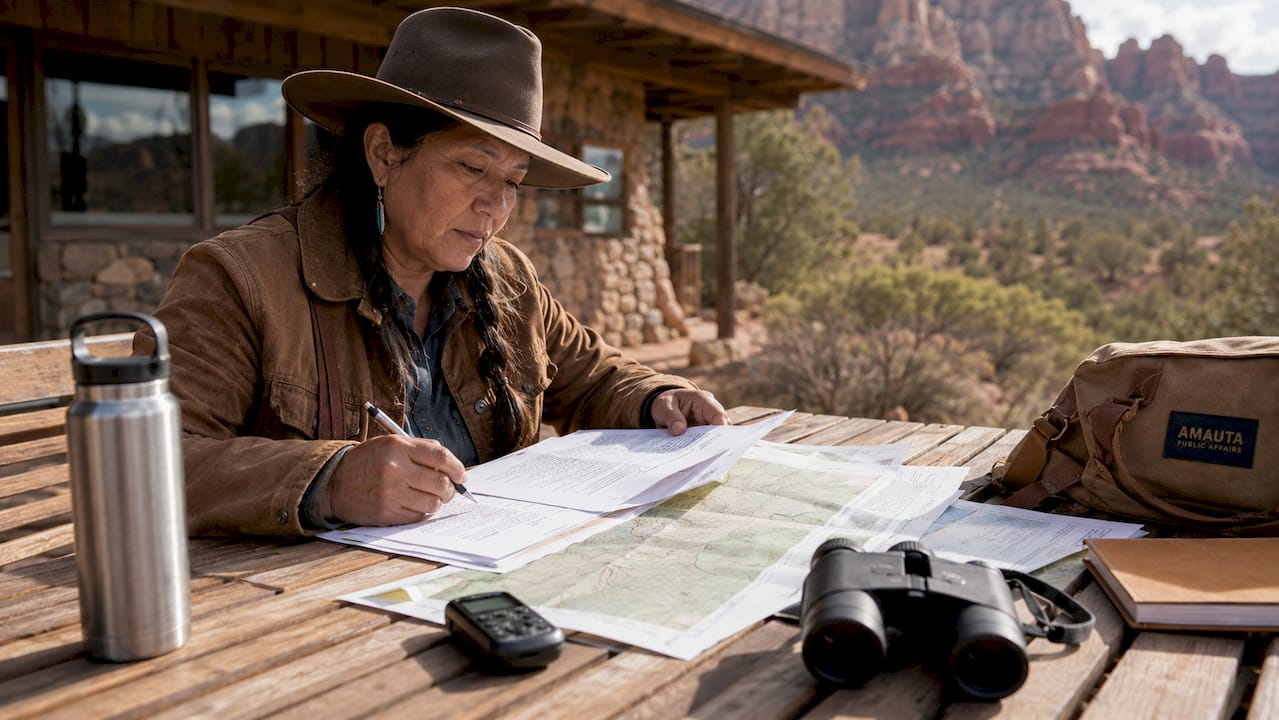
Public lands advocacy is the organized effort to influence policies and management decisions that protect and enhance public lands for current and future generations. Understanding how public lands advocacy works means recognizing it as a structured discipline, not a spontaneous reaction to threats. The outdoor recreation community alone sent over 1.3 million messages to lawmakers in early 2026, requesting $100 million for Bureau of Land Management recreation programs and $70 million for U.S. Forest Service programs. That volume signals how organized, data-driven, and consequential this field has become. Agencies like the Bureau of Land Management and coalitions like Outdoor Alliance anchor the modern advocacy ecosystem, giving individuals and groups the infrastructure to act with real force.
How public lands advocacy works: core strategies
Public lands advocacy operates through several distinct tactics, each designed to apply pressure at a specific point in the policy process. Digital mobilization sits at the center of modern campaigns. Coordinated email and phone campaigns reach lawmakers at scale, while targeted messaging ensures that the right constituents contact the right offices at the right moment.
Public comment submissions are the most direct tool advocates have to shape land management decisions. The key is specificity. Site-specific comments that reference named features, such as “north-facing trees off the ridge on the X drainage,” carry far more weight with agency staff than generic form letters. Vague complaints are easy to dismiss. Granular, technical feedback forces a substantive response.

Legislative tracking is the third pillar. Advocacy groups monitor Congressional activity to identify threats early. Tracking an antiparks caucus of 25 members who introduced or co-sponsored 65 bills to weaken public land protections gives advocates a clear map of where opposition is concentrated. One 2025 amendment alone risked selling off 250 million acres of public land. Knowing which bills are moving and who is sponsoring them allows advocates to mobilize before a vote, not after.
Direct relationships with elected officials’ staff provide a quieter but equally powerful channel. Staff members shape how lawmakers understand issues. Advocates who build those relationships over time gain access that no single campaign can manufacture.
Digital mobilization: Coordinated email and phone campaigns reach lawmakers at scale and create visible political pressure.
Public comment submissions: Specific, site-grounded comments carry more influence than form letters during agency review periods.
Legislative tracking: Monitoring bill sponsorship and caucus activity reveals threats before they advance.
Coalition building: Membership organizations amplify individual voices and coordinate messaging across regions.
Direct staff relationships: Sustained contact with legislative staff builds influence that outlasts any single campaign.
Pro Tip: Assign one person in your group to track legislative calendars and agency notices. Divided responsibility prevents the burnout that kills long-term advocacy efforts.
How do policy changes affect public lands advocacy efforts?
Regulatory shifts force advocates to adapt their strategies quickly. The most significant recent example is the BLM’s rescission of the 2024 Conservation and Landscape Health Rule in may 2026. That rule had placed conservation on equal footing with industry uses across 245 million acres of federal land. Its removal eliminated a legal framework that advocates had spent years building.
Nearly 140,000 public comments were submitted during the rule’s consideration period. That level of public engagement did not prevent the rollback, but it created a documented record of opposition. That record matters in future litigation and in future rulemaking cycles.
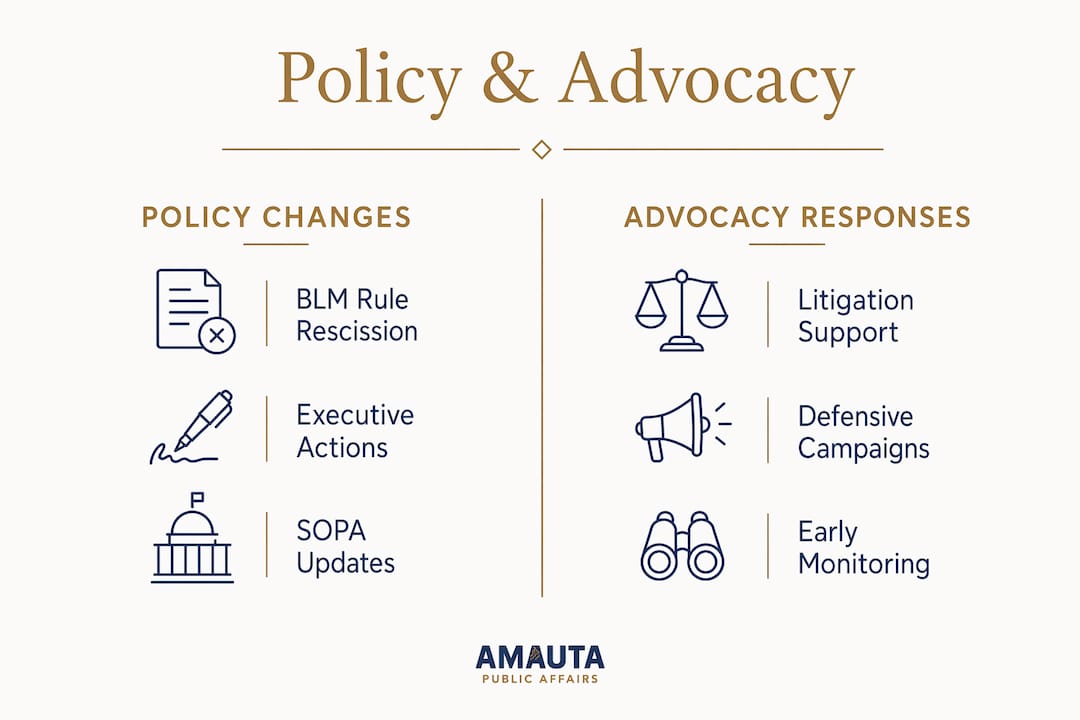
The table below maps the key policy shifts advocates are responding to in 2026 and the corresponding advocacy responses.
Policy change | Advocacy response |
BLM Conservation Rule rescission | Litigation support, renewed rulemaking comment campaigns |
Proposed public land selloffs | Coordinated fly-ins, grasstops lobbying, media pressure |
Staffing cuts at federal agencies | Coalition letters, budget appropriations advocacy |
Antiparks caucus bill introductions | Bill-specific opposition campaigns, constituent outreach |
Advocacy campaigns respond to executive actions by shifting from proactive to defensive postures. When a rule is rescinded, the immediate goal becomes preventing further erosion while building the political conditions for restoration. Advocacy communications that frame rollbacks in terms of local economic impact tend to reach audiences beyond the traditional conservation base. That broader reach is what converts public pressure into political cost for lawmakers.
What practical steps can individuals take to advocate for public lands?
Effective participation in public lands management starts before proposals become final. The Schedule of Proposed Actions, known as SOPA, is the most underused tool in individual advocacy. SOPA releases quarterly, listing early-stage projects across federal lands and opening windows for public input before decisions solidify. Most advocates miss this window entirely and only engage after a decision is announced, when influence is minimal.
The following steps give individuals a clear pathway to meaningful participation:
Subscribe to SOPA updates for the national forests and BLM field offices nearest to you. Set a calendar reminder to review each quarterly release.
Submit site-specific comments on any project that affects land you know well. Reference named features, trail segments, or watershed areas. Generic comments are filed and forgotten.
Build a coalition with local hiking clubs, hunting organizations, ranching associations, or recreation businesses. A comment signed by 12 organizations carries more weight than 12 individual comments.
Request a meeting with agency staff during the scoping phase of any project. Face-to-face contact with a district ranger or field office manager creates a relationship that shapes how your future comments are received.
Contact your Congressional representatives’ district offices and ask to meet with the staff member who handles natural resources. That staffer often briefs the lawmaker directly before votes.
Track your interactions in a simple log. Dates, names, and outcomes give your group institutional memory that survives volunteer turnover.
Assigning a dedicated Land Use Director within your advocacy group to monitor technical updates prevents burnout and keeps the group’s knowledge current. One person tracking SOPA, environmental assessments, and agency notices is far more effective than a committee that meets only when a crisis erupts.
Pro Tip: When submitting public comments, always include your name, your connection to the land, and at least one specific geographic reference. Agency staff are required to respond to substantive comments, and specificity is what makes a comment substantive.
How do advocacy organizations coordinate and amplify their impact?
Coalitions multiply the reach of individual advocacy groups without requiring each member to duplicate effort. Outdoor Alliance’s 2026 strategic plan focuses on building bipartisan conservation movements, increasing advocacy power, and supporting human-powered outdoor recreation. The plan directly responds to regulatory rollbacks and federal staffing cuts that reduce agency capacity to manage public lands.
Coordinated campaigns work because they concentrate pressure. In 2025, coordinated messaging and lobbying prevented proposals to sell off up to 3.3 million acres of public land. That outcome required 323 meetings with lawmakers, including fly-ins and grasstops collective trainings. No single organization could have sustained that volume of contact alone.
Shared data and mapping tools allow coalitions to identify which districts are most vulnerable to land selloff proposals and target outreach accordingly.
Coordinated messaging calendars prevent member organizations from flooding the same office on the same day while leaving other offices untouched.
Grasstops engagement brings in business owners, veterans, and faith leaders whose voices carry credibility with lawmakers who are skeptical of traditional environmental groups.
Bipartisan framing extends the coalition’s reach into districts where conservation is not a dominant political identity.
“Even when lobbying fails to pass legislation, public advocacy remains vital. It signals political opposition and plants seeds for future legislative cycles. The political cost of ignoring a well-organized constituency compounds over time.”
The role of public comment campaigns in this ecosystem extends beyond individual proposals. A sustained pattern of high-volume, specific public engagement tells agency staff and lawmakers that a constituency is organized, informed, and persistent. That reputation is itself a form of political capital. Organizations that invest in government and nonprofit advocacy infrastructure build durable influence that outlasts any single election cycle.
Key Takeaways
Public lands advocacy works when it combines early monitoring, specific public engagement, coalition coordination, and sustained relationships with agency staff and elected officials.
Point | Details |
Early monitoring is decisive | SOPA releases quarterly; engaging before decisions are final is the highest-leverage moment. |
Specificity drives comment impact | Site-specific comments referencing named features carry far more weight than form letters. |
Coalitions multiply pressure | Coordinated campaigns with 323 lawmaker meetings helped prevent 3.3 million acres from being sold. |
Policy rollbacks require adaptive responses | The 2026 BLM Conservation Rule rescission shows advocates must shift from proactive to defensive strategies quickly. |
Sustained relationships outlast campaigns | Direct contact with legislative staff and agency personnel builds influence no single campaign can replicate. |
What I’ve learned about public lands advocacy after years in the field
The most common mistake I see is treating advocacy as an event rather than a practice. Groups mobilize when a threat appears, flood an agency with comments, and then go quiet. That cycle feels productive, but it leaves advocates perpetually reactive and agencies with no reason to consult them early.
The groups that win over time do something different. They show up consistently, not just in crisis. They know the district ranger by name. They submit comments on routine projects, not just controversial ones. That pattern of engagement builds a reputation that changes how agency staff and lawmakers treat them. It is not glamorous work, but it is the work that actually moves the needle.
The 2026 regulatory environment has made this harder. Rollbacks of rules like the BLM Conservation and Landscape Health Rule remove legal frameworks that advocates spent years building. That is genuinely discouraging. But the documented record of 140,000 public comments on that rule is not nothing. It is evidence of organized opposition that will matter in the next rulemaking cycle and in any litigation that follows.
The other thing I would push back on is the assumption that bipartisan advocacy is a compromise. Framing public lands protection around hunting, fishing, ranching, and outdoor recreation economics reaches constituencies that traditional conservation messaging misses entirely. That is not diluting the message. That is expanding the coalition. And a larger coalition is the only thing that creates durable political protection for public lands.
— Ignacio
How Amautapublicaffairs supports public lands advocacy
Amautapublicaffairs brings a campaign-style approach to land management advocacy, helping clients navigate regulatory changes, organize stakeholder communications, and build public support for land use projects. The firm evaluates the community landscape before designing any campaign, identifying where opposition is concentrated and where coalition partners can be recruited.
For advocates facing the complex regulatory environment of 2026, Amautapublicaffairs offers tailored strategies that cover public comment coordination, media relations, and direct engagement with agency staff and elected officials. The firm’s full range of services is designed for clients who need more than generic advice. They need a team that understands the specific political and regulatory terrain they are operating in.
FAQ
What is public lands advocacy?
Public lands advocacy is the organized effort to influence policies and management decisions that protect federal, state, and local public lands. It includes public comment submissions, legislative lobbying, coalition building, and direct engagement with agency staff.
How effective are public comment campaigns?
Public comment campaigns are most effective when comments are specific and site-grounded. Nearly 140,000 comments were submitted on the BLM Conservation and Landscape Health Rule, creating a documented record of opposition that informs future rulemaking and litigation.
What is the Schedule of Proposed Actions (SOPA)?
SOPA is a quarterly federal publication listing early-stage land management projects open for public input. Monitoring SOPA allows advocates to engage before decisions are finalized, which is the highest-leverage point in the process.
How do advocacy coalitions prevent land selloffs?
Coordinated coalitions use fly-ins, grasstops lobbying, and targeted messaging campaigns to apply sustained pressure on lawmakers. In 2025, this approach helped prevent proposals to sell off up to 3.3 million acres of public land through 323 documented meetings with lawmakers.
Why does advocacy matter even when legislation fails?
Failed legislation still signals organized political opposition to lawmakers and agencies. That signal raises the political cost of future anti-public lands actions and creates conditions for stronger advocacy in the next legislative cycle.
Recommended
Comments